A public lineage archive
One tree, with room
on it for every family.
वंशवृक्ष
Every household keeps a piece of it — a name in a horoscope, a village nobody has visited in eighty years, a great-grandmother whose surname is the only clue left. Put in the one name you are sure of and see what it already joins onto.
- 1,529
- people recorded
- 10
- family lines
- 10
- generations deep
- 1782
- earliest birth
- 12
- ancestral villages
Why this exists
Memory has a half-life, and the joins are what get lost first.
Who this is for
Anyone with a family. There is no community you have to belong to, no list you have to be on, and nothing to prove before you can add a record.
Most families can name four generations without help. The fifth is a first name and a village. The sixth is gone — and with it goes the only evidence that two branches now living in different countries were one household within living memory.
Two families that lost touch in 1910 will usually still agree on three things: the sage their line descends from, the deity the household turns to first, and the village they name as their root. Those three fields do more to reconnect a scattered family than any amount of names and dates, which is why this archive is organised around them.
Written down once, none of it decays again.
Free to read
The whole archive, in full, with no account and no membership.
Open to correction
Anyone may correct a record, and every change carries a reason.
Sourced
Each record says where it came from and how sure of it we are.
Find a way in
Four things a family tends to remember
Even when the names have run out, these usually survive — and any one of them narrows a search from thousands of people to dozens. Each index lists everything the archive holds, in alphabetical order.
Usually either an office a family once held, or the village it came from. Both are strong evidence of where a branch sits.
The rishi a line descends from. Passed father to child and never changed by marriage, so it survives centuries of migration intact.
The family deity, and the temple it sits in. A household that has forgotten its village has usually not forgotten this.
The place a family names as its root, however many generations ago it left, and however far down the coast it went after.
Browse
Every family has a shape
A line is not a surname — it is one connected web of relatives, and where two families married their records join and the two become one. Nine generations of two brothers looks nothing like five generations of eleven children, so each line is drawn as itself.
Bhat & Mallya of Verna
from Shrinivas Bhat, born 1793
- 133
- people
- 8
- generations
- 1793–2016
- recorded
Kamath & Pai of Kushasthali
from Waman Kamath, born 1782
- 325
- people
- 10
- generations
- 1782–2015
- recorded
Mallya & Karkal of Chorao
from Trimbak Mallya, born 1809
- 70
- people
- 8
- generations
- 1809–1985
- recorded
Three of 10 lines, taken alphabetically — the home page does not rank families. Browse the full index
Kuladevata
The buildings behind the field
Names and dates are not what a fourteen-year-old will read. What they will look at is the temple their grandmother means when she says Mangeshi — and once they have, the kuladevata on a record stops being a form field and becomes a place with a lamp tower in front of it.
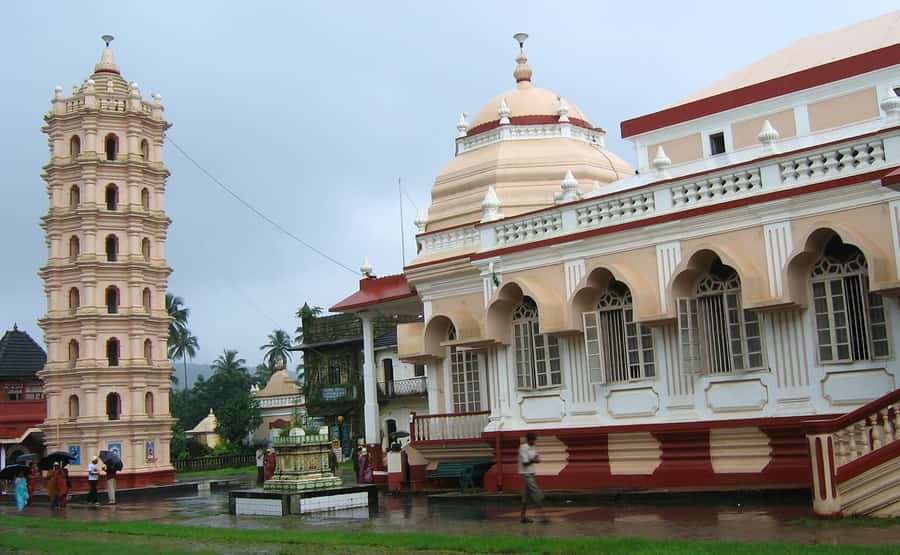
Shri Mangueshi Temple
श्री मंगेशPriol
Photograph Vinayaraj · CC BY-SA 3.0
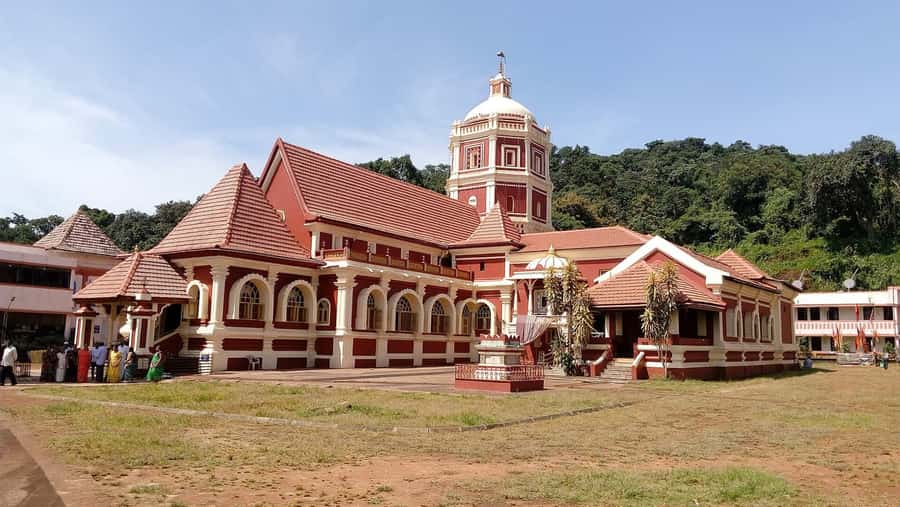
Shri Shantadurga Temple
श्री शांतादुर्गाKavale
Photograph Amol.Gaitonde · CC BY-SA 4.0
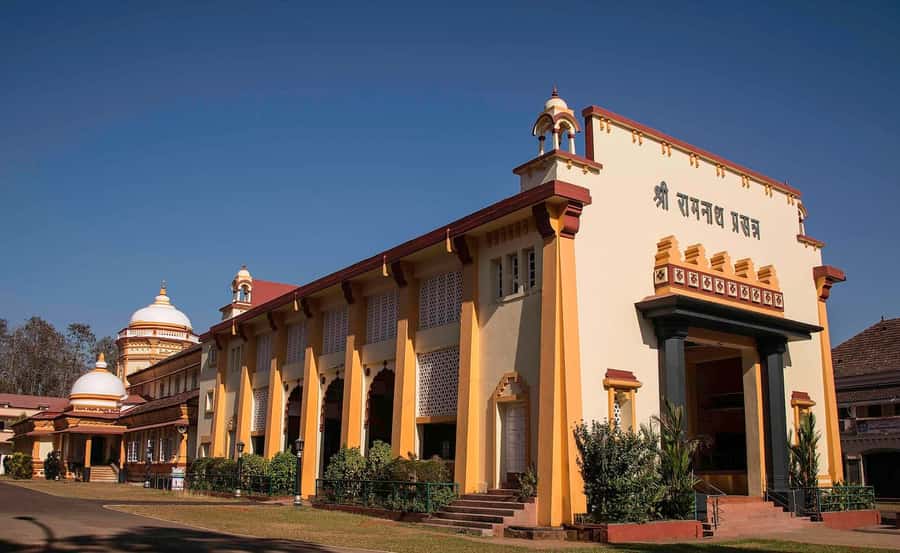
Shri Ramnathi Temple
श्री रामनाथBandora
Photograph Mahabalaindia · CC BY-SA 4.0
Furthest back
The oldest names in the archive
Every line stops somewhere. These are the earliest ancestors anyone has been able to name — if your family holds a household ledger or a temple register that reaches further back, it is worth more than you think.
योगदान · Contribute
You know something this archive does not.
Held so far
1,529 people, across 10 lines, reaching back to 1782.
A grandmother’s maiden name. The village on an old land document. Which brother went to the city in 1938 and which stayed. Send one fact or a hundred — every submission is read by a person before it goes in, and every record says where it came from.